
Driving in Toronto as a visitor makes sense for some trips and not for others. A car helps for Pearson Airport, the west end of the city, and trips outside Toronto, while downtown, traffic and parking make transit the simpler choice. This guide covers the licence rules for visiting drivers, the hours to avoid on the roads, how parking and the Highway 407 ETR toll work, and where to stay so the car is used only for the trips that need it.
Do you need a car to visit Toronto?
Whether you need a car in Toronto depends on where you are going. A car is useful for Pearson, the west end, and trips beyond the city. For downtown sightseeing, transit is usually faster and cheaper than driving and then paying to park.
The deciding factor is where each day’s trips start and end. A day spent between downtown attractions rarely needs a car, while a day that includes the airport, the suburbs, or a drive out of the city usually does. Driving in Toronto for tourists works best when the car is matched to the trip:
| Trip | Better choice |
|---|---|
| Downtown attractions | Transit |
| Pearson Airport | Car or taxi |
| Woodbine and north Etobicoke | Car |
| Trips outside the city | Car |
| Late nights downtown | Taxi or rideshare |
For a trip with a few downtown days and a few driving days, a car can be picked up for the driving days only, since rental cars are available both in the city and at Pearson Airport, according to the City of Toronto.
Renting a car at the airport is covered in our guide to getting from Pearson to Etobicoke, and the no-car option in our guide to getting around Etobicoke without a car.
What do you need to drive in Ontario as a visitor?
A visitor staying in Ontario for less than three months can drive with a valid licence from their home province, state, or country. The driver also needs proper insurance for the vehicle and an original or exact copy of the vehicle ownership permit, according to Ontario’s rules for visiting drivers.
The driving rules for tourists in Ontario also set a minimum age. Visiting drivers must be at least 16, and a visitor from another country staying in Ontario for more than three months needs an international driver’s permit from their own country, according to the MTO Driver’s Handbook, published by Ontario’s Ministry of Transportation (MTO). The permit can’t be obtained once the visitor is in Ontario, so it must be obtained in the home country before the trip. Visitors are also not eligible for an Ontario driver’s licence, according to the same handbook. Guests from another country on an extended stay of more than three months fall under that rule.
These rules can change, so Ontario’s official page is the place to confirm them before travelling.
When is traffic worst in Toronto?
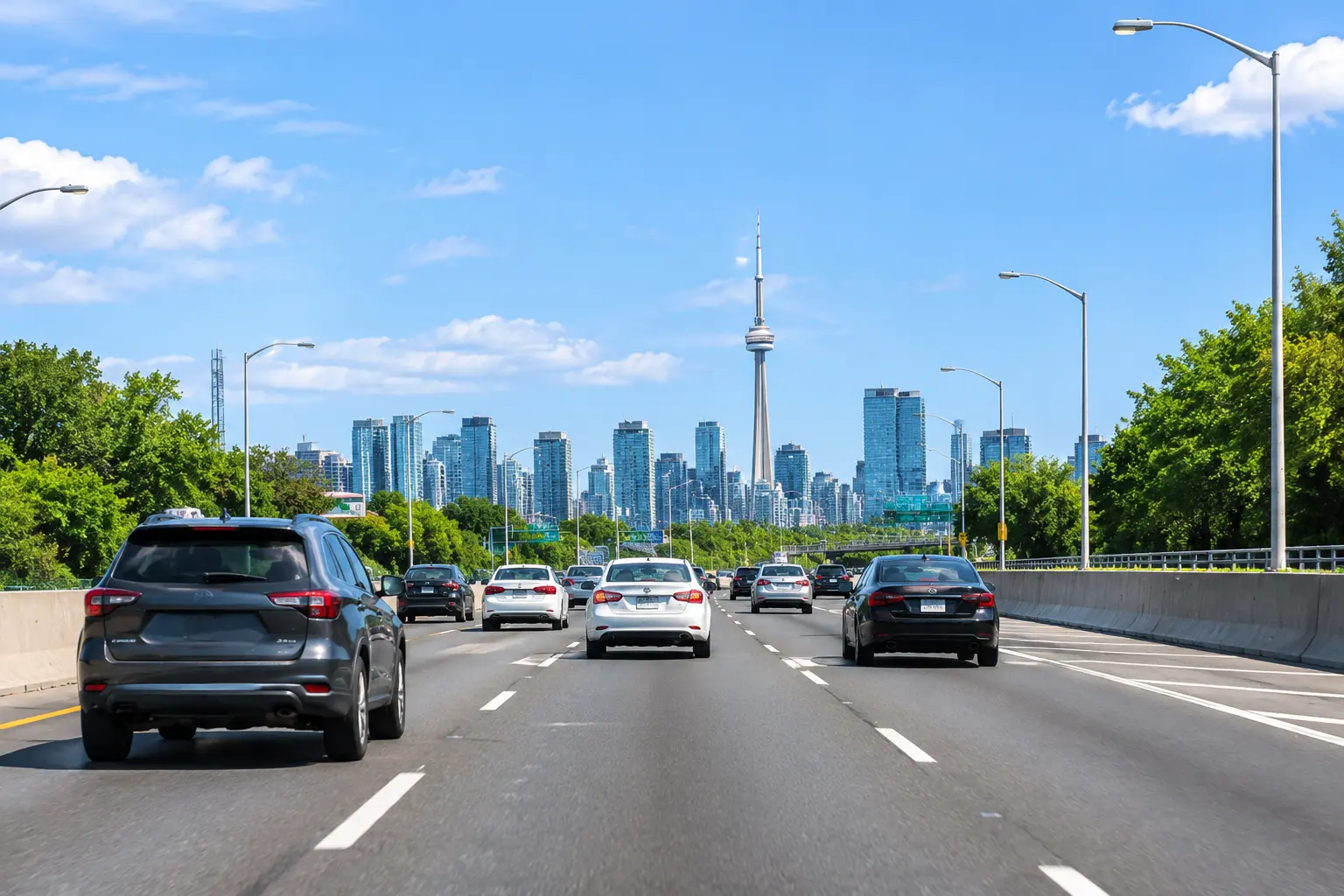
Weekday rush hour runs from 7 to 9 a.m. and again from 4 to 6 p.m., according to the City of Toronto’s visitor guide. Highway and downtown trips are easier outside those windows, so those are the hours to plan around when driving around Toronto.
Toronto rush hour affects the main routes visitors use, including Highway 401, Highway 427, and the Gardiner Expressway. A trip that can start after 9 a.m., or wait until after 6 p.m., stays outside the City’s rush-hour windows. A drive that has to happen during those hours, such as a morning trip to the airport, is easier with extra time built in, because the City notes that the weekday rush lasts more than an hour each time.
From our hotel, guests heading downtown at rush hour can leave the car parked and take Line 6 Finch West instead.
What should first-time drivers in Toronto watch for?
A few downtown rules matter most for driving in Toronto for the first time, because they cover situations that come up on the first downtown drive. Each one comes from the City of Toronto’s own guidance for visitors. These are the points to know before driving in downtown Toronto:
- Streetcars. Some downtown streetcars flash lights when stopping, and drivers must stop at least two metres behind a streetcar that is picking up or dropping off passengers, so people can cross the road safely.
- Bike lanes. Many major streets have bike lanes next to the curb, so cyclists are worth watching for when changing lanes, turning, and opening car doors.
- Yonge Street addresses. Yonge Street divides the city into east and west, and street numbers start from Yonge in both directions, so 100 Queen Street East and 100 Queen Street West are on opposite sides of Yonge.
How does parking work in Toronto?
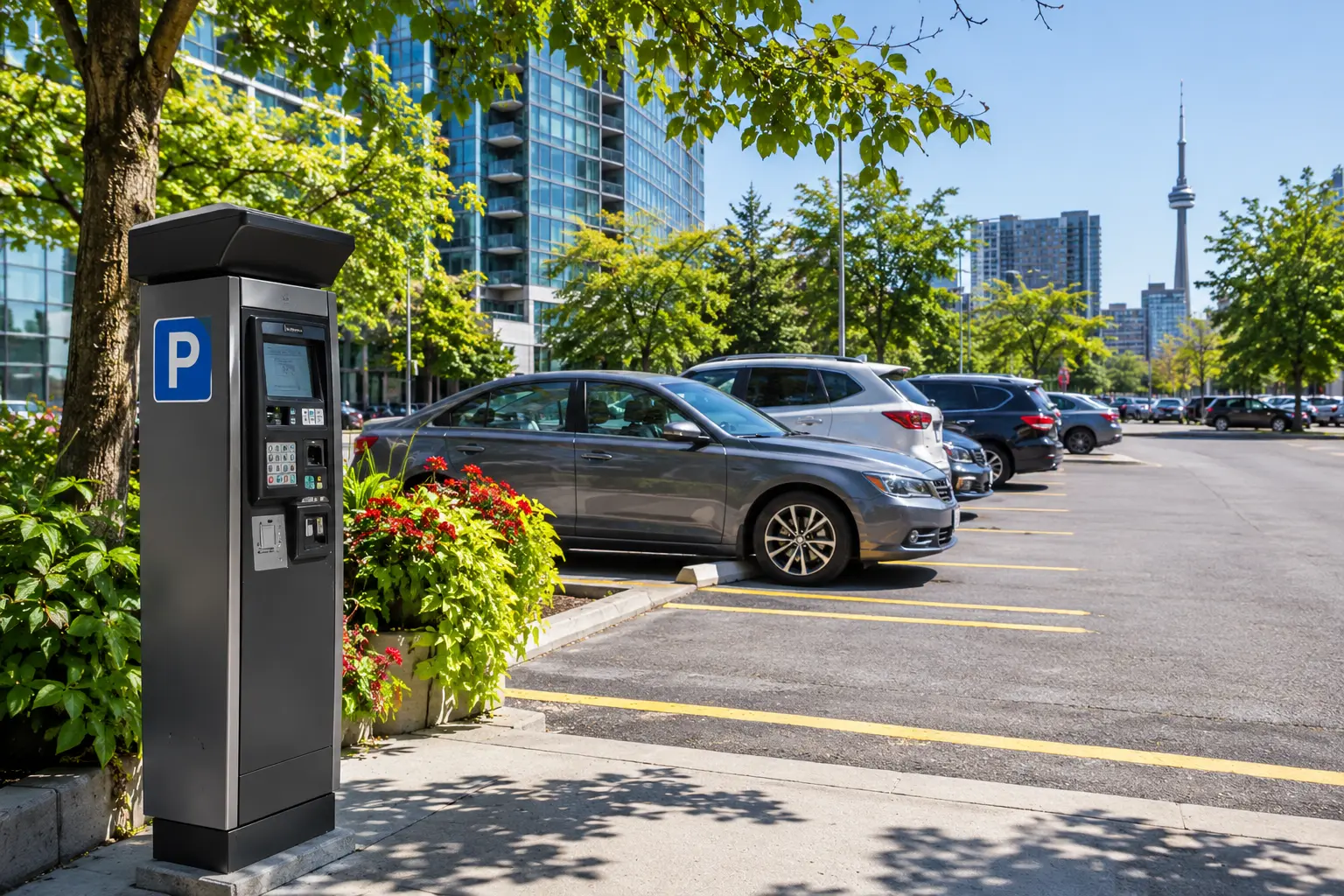
The posted sign decides the parking rules for each spot, so reading it every time is the first rule of parking in Toronto, and ignoring it can mean a ticket or a tow. Downtown street parking is limited to set times and usually paid at a street machine, and overnight street parking generally needs a temporary permit.
On public roads, an unsigned maximum three-hour parking limit applies unless a sign says otherwise, according to the City’s parking regulations. Visitors can get a temporary parking permit for 24-hour, 48-hour, or weekly on-street parking on permit parking streets, where space is available. City-owned lots carry the Green P logo, a large P in a green circle, and current rates are listed on the site for Green P lots, run by the Toronto Parking Authority. RVs, campers, and trailers can’t park on city streets overnight and aren’t eligible for temporary permits. Downtown has very few spaces for oversized vehicles, though Exhibition Place sometimes has outdoor lots available for a fee, according to the City’s visitor guide.
Accessible parking permits are issued to the person with the disability, are not transferable, and must be displayed on the sun visor or front dash. Visitors from outside Ontario can apply through the Province of Ontario with proof of a valid permit from their home jurisdiction.
These Toronto parking tips all come back to the posted sign, because the sign overrides the general rule for that spot. One way to skip the search for overnight parking is to stay where parking is included.
How does the 407 ETR toll work in a rental car?
Highway 407 ETR (Express Toll Route) has no toll booths. Cameras read the rental car’s licence plate, the charges go to the rental company, and the rental company bills the driver, with any fees of its own added to the total. How a rental company handles 407 tolls is worth confirming before using the highway.
Every 407 ETR rental car trip is recorded automatically as the car drives, with cameras capturing the entry and exit points, according to how the 407 bills rental cars. A car without a transponder (a small device mounted on the windshield that the highway reads automatically) also faces camera charges billed per trip, plus an account fee in any month the account is used, according to 407 ETR’s frequently asked questions. A personal transponder doesn’t solve this in a rental car, because those charges can’t be transferred to the driver’s own account. Drivers in their own out-of-province or U.S. vehicle can use NextPass, which 407 ETR designed for out-of-province and U.S. drivers.
Our hotel is close to the 407 and Highway 427, so the toll rules are worth knowing before the first drive.
Where should you stay in Toronto if you have a car?
The simplest base for a visitor with a car is a hotel where parking is easy and the highways are close, with transit for downtown. The car then covers the trips that need it, and downtown parking is avoided on the days it isn’t needed.
Where to stay in Toronto with a car comes down to parking and highway access first, then a transit option for the city centre. Our suites come with free on-site parking, and we’re near Highway 427 and the 407 ETR, about a 15-minute drive from Pearson and close to Woodbine. Westmore station on Line 6 is a short walk away, so guests can park once and ride to Line 1 for downtown. Getting to the station is covered in our Westmore station guide. Every suite has a full kitchen, so there is no need to drive out for every meal.
Driving into Toronto?
Stay at Skye Hotel & Residences in Etobicoke, with free on-site parking, full kitchens, and convenient access to Highway 427 and Line 6 Finch West.
Check AvailabilityCall (416) 746-4691
Where can you check road closures before you drive?
The City of Toronto’s road restrictions map covers city streets, and Ontario 511 covers Ontario’s highways, including the 401 and the 427. Both are worth checking on the morning of a long drive, because closures and construction change from day to day.
Toronto road closures on city streets appear on the City’s road restrictions map, which shows disruptions so drivers can find better routes. Ontario 511 provides up-to-the-minute traffic information for the province, including closures, construction, collisions, and weather. Ontario 511 also has a free app, with images from more than 900 highway cameras and a drive mode that gives hands-free audio alerts. The City notes that its map information is subject to change without notice.
If you’re driving to Toronto, base yourself where parking is free and the highways are close. Our suites at Skye Hotel & Residences in Etobicoke come with free on-site parking and a full kitchen, with Line 6 a short walk away for days you’d rather not drive. Check availability or call us at (416) 746-4691.
Planning a Toronto trip with a car?
Explore our residence-style suites with free parking in north Etobicoke. Contact us about availability for your travel dates.
Ask About Your StayCall (416) 746-4691